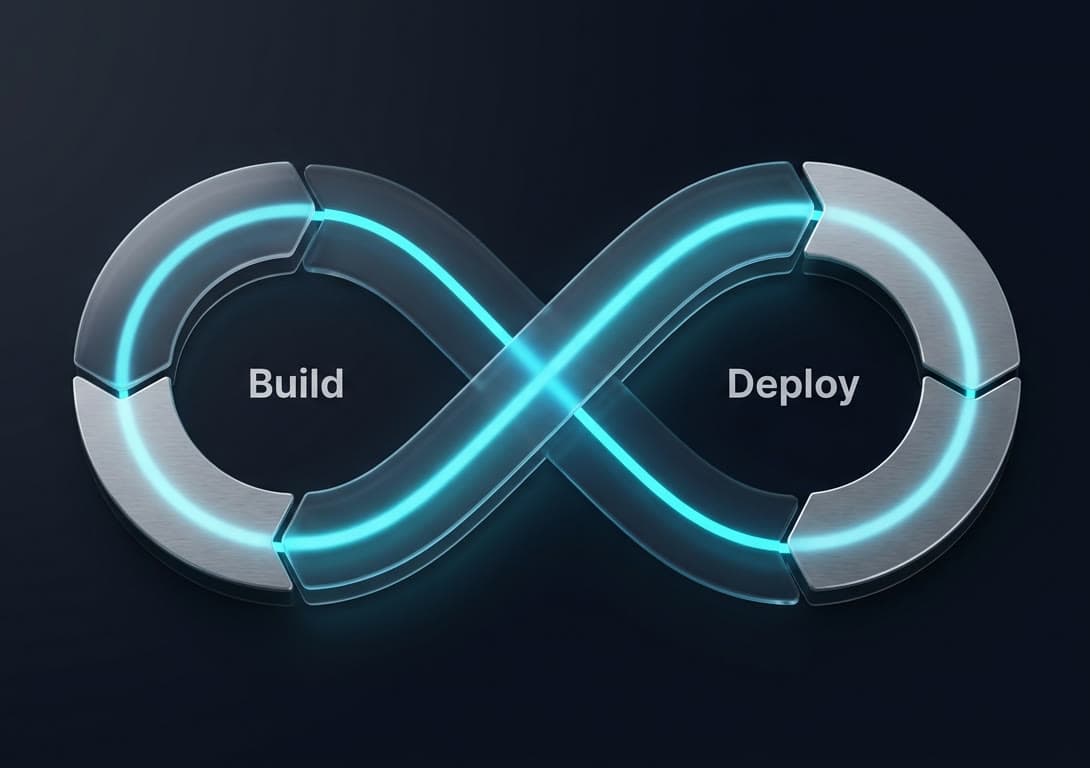
DevOps combines culture, automation, and CI/CD so teams deliver software faster and more reliably. Performance is measured by DORA's four keys: deployment frequency, lead time for changes, change failure rate, and failed-deployment recovery time. Elite teams excel at all four at once, proving speed and stability rise together rather than trading off.
DevOps has a branding problem. The word gets attached to a job title, a toolchain, or a team that sits between developers and operations, none of which is what it actually means. DevOps is a way of building and running software that lets teams ship faster and more reliably at the same time, and the reason we can talk about it with precision rather than slogans is that it is measurable. The DORA research program gave the industry four numbers that cut through the noise, and those numbers tell a story that contradicts the oldest assumption in software delivery.
At PEKVOR we build delivery capability against those four numbers. This article explains what they are, what elite performance looks like, why speed and stability are not enemies, and where AI fits into the pipeline.
What DevOps really is: culture plus automation
Strip away the tooling talk and DevOps is a combination of culture and automation. The cultural half is shared ownership between the people who write software and the people who run it, so that delivering and operating a system is one responsibility rather than two departments throwing work over a wall. The automation half is the machinery that makes frequent, safe change practical: continuous integration, continuous delivery, and the testing and infrastructure discipline underneath them.
Neither half works alone. Automation without shared ownership just accelerates dysfunction, and culture without automation is a good intention that cannot keep pace. DevOps is the pairing.
The delivery pipeline: CI, CD, and continuous deployment

The pipeline is where the automation lives, and the terms are worth distinguishing. Continuous integration means developers merge work frequently into a shared mainline, with automated builds and tests verifying each change so integration problems surface in minutes rather than at the end of a release. Continuous delivery extends that so every change that passes the pipeline is kept in a genuinely releasable state, deployable at any moment on a decision. Continuous deployment goes one step further and releases every passing change to production automatically, with no manual gate.
The progression is one of increasing confidence. Each stage demands stronger automated testing and safer release mechanics, and each one shortens the distance between writing code and delivering value.
DORA's four keys
The reason we can measure any of this is the DORA research, run through the Google Cloud State of DevOps program, which distilled delivery performance into four key metrics grouped into two dimensions.
- Throughput is measured by deployment frequency, how often you release to production, and lead time for changes, how long it takes a commit to reach production.
- Stability is measured by change failure rate, the share of deployments that cause a failure requiring remediation, and time to restore service, how quickly you recover after a failed deployment.
The elegance is in the pairing. Throughput without stability is recklessness; stability without throughput is stagnation. The four keys force you to look at both at once, which is exactly where the interesting finding lives.
What elite performance looks like
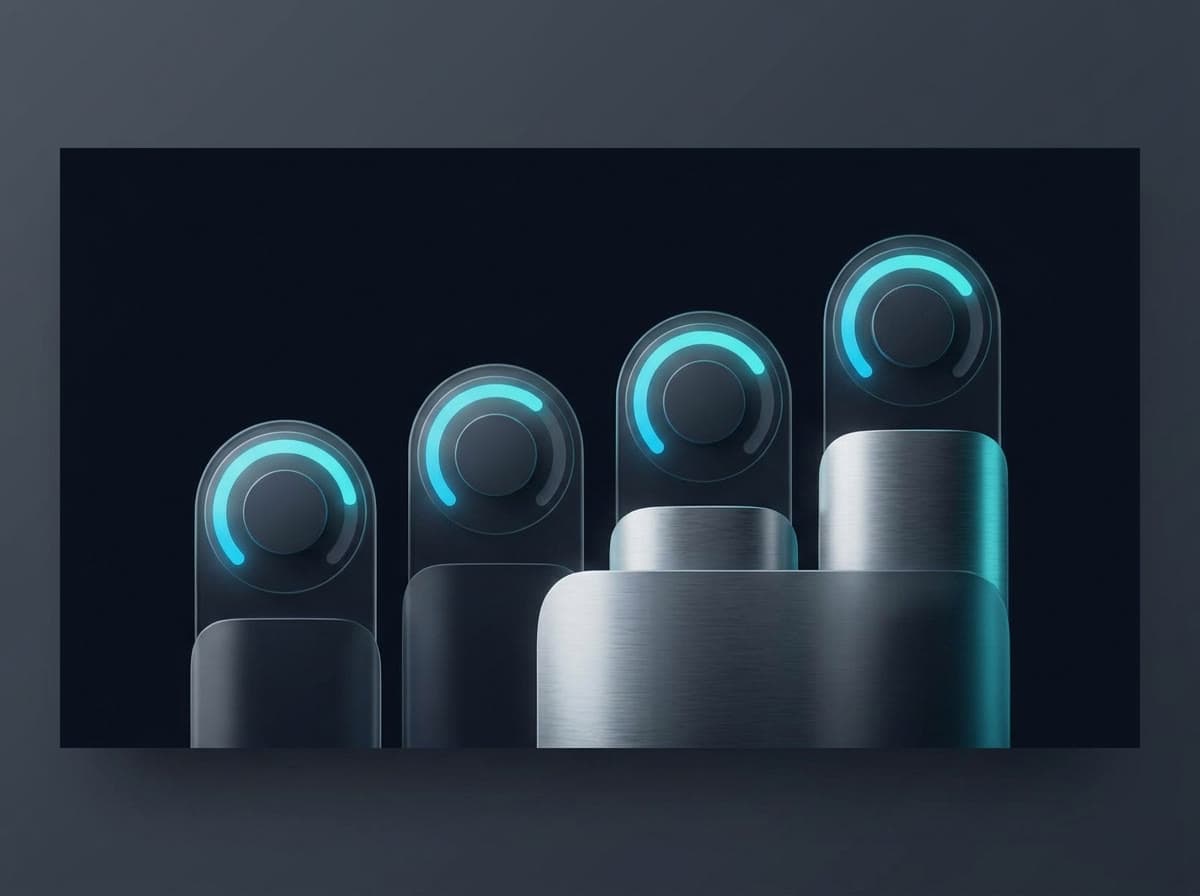
DORA's benchmarks make elite performance concrete. Elite teams deploy on demand, keep lead time for changes under one day, hold change failure rate around 5%, and restore service in under one hour. The gap to low performers is not incremental; it is an order of magnitude and then some. Elite performers deploy roughly 182 times more frequently and recover about 2,293 times faster than low performers, while sustaining around a 7 times lower change failure rate.
Read those three figures together, because their combination is the whole point.
Speed without chaos: why throughput and stability are not a trade-off
The intuition that shipping faster must mean breaking more is the assumption DORA demolishes. If speed came at the cost of stability, elite teams would deploy far more often but fail far more often too. Instead they deploy about 182 times more frequently and fail roughly 7 times less often and recover about 2,293 times faster. They are better at all four keys simultaneously.
The reason is mechanical, not magical. Small, frequent changes are easier to test, easier to review, and easier to reason about than large, infrequent ones. When something does go wrong, a small change is easy to identify and reverse, which is why elite recovery times are measured in minutes. The same practices that make deployment fast, automation, small batches, and fast feedback, are the practices that make it safe. Speed and stability are not opposite ends of a slider. They are two outputs of the same well-engineered system.
Automation that matters: testing, IaC, progressive delivery, and rollback

Achieving that combination rests on specific automation. Comprehensive automated testing is the foundation, because you cannot deploy frequently with confidence if verification is manual and slow. Infrastructure as code makes environments reproducible and changes reviewable, removing the drift and hand-configuration that cause failures.
On the release side, progressive delivery techniques such as rolling out a change to a small slice of traffic before a full release contain the blast radius of any problem, and fast, reliable rollback turns a bad deployment from an outage into a brief blip. These are precisely the mechanisms behind an under-one-hour restore time. Automation here is not about doing the same work faster; it is about making frequent change safe enough to do at all.
AI in the pipeline: amplifier, not autopilot
AI now sits inside most delivery workflows, and the DORA State of AI-Assisted Software Development 2025 report is clear-eyed about what that means. About 90% of respondents use AI in their work, yet roughly a third do not fully trust AI-generated code. The report finds that AI correlates with higher throughput but also with more instability, and it characterizes AI as an amplifier: it helps strong teams and hurts weak ones.
That framing is the practical guidance. AI speeds up code production, which raises throughput, but if a team lacks the testing, review, and delivery discipline to catch what AI gets wrong, that extra speed flows straight into the instability metrics. Feed more code faster into a weak pipeline and you get failures faster. Feed it into a strong one and you get genuine acceleration. AI is not autopilot; it magnifies whatever delivery capability already exists, which is exactly why the four keys matter more, not less, in an AI-assisted world.
How PEKVOR builds delivery capability
We build delivery capability by treating the four keys as the scoreboard from the start. We instrument deployment frequency, lead time, change failure rate, and time to restore service so a team can see honestly where it stands and improve against a target rather than a feeling. Elite is not a vibe; it is deploy on demand, lead time under a day, change failure rate near 5%, and recovery under an hour, and we engineer toward those thresholds deliberately.
Getting there is the pairing DevOps has always been about. We establish the shared-ownership culture and build the automation underneath it: robust continuous integration and delivery, comprehensive automated testing, infrastructure as code, progressive delivery, and fast rollback, the machinery that lets throughput and stability rise together. And where AI enters the pipeline, we treat it as an amplifier, strengthening the testing and review discipline that decides whether AI accelerates a team or destabilizes it.
The DORA evidence settles the old argument: you do not have to choose between fast and safe. The teams that lead are better at both at once, and that combined capability is exactly what we help teams build.
Frequently asked questions
What are the four DORA metrics?
Deployment frequency and lead time for changes measure throughput. Change failure rate and time to restore service after a failed deployment measure stability. Together they capture both how fast a team delivers and how reliably it does so.
What does good DevOps performance look like?
DORA's elite benchmarks are deploying on demand, lead time under one day, a change failure rate around 5%, and restoring service in under one hour. Elite performers deploy about 182 times more frequently than low performers.
Doesn't shipping faster mean more bugs?
The DORA research shows the opposite. Elite performers combine roughly 182x more frequent deployments with about a 7x lower change failure rate and roughly 2,293x faster recovery. Speed and stability are achieved together, not traded.
Does AI make delivery teams faster?
The DORA 2025 report found AI correlates with higher throughput but also more instability, and describes AI as an amplifier that helps strong teams and hurts weak ones. About 90% of respondents use AI, yet roughly a third do not fully trust AI-generated code.
Have a project where this matters?
This is the discipline we bring to every engagement. Tell us what you are building and we will show you how we would approach it.